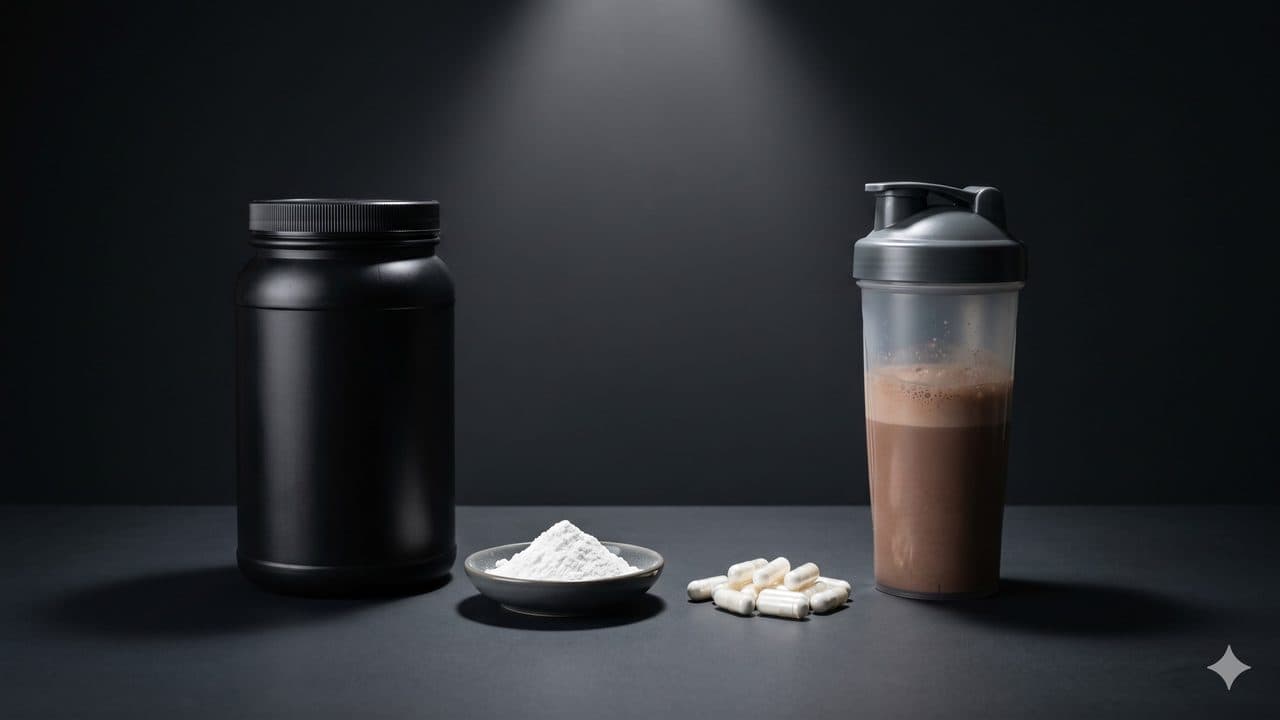
運動補充品:蛋白質、肌酸、BCAA 值得吃嗎?
補充品市場百花齊放,但多數產品的科學依據遠不如廣告宣稱。本文針對業餘運動員最常詢問的三種補充品——蛋白質、肌酸、BCAA——逐一解析其實證等級、適用對象與正確劑量,幫你把預算花在刀口上。
前言
走進任何一家運動用品店,補充品架上的選擇多到令人眼花繚亂,每種產品都聲稱能讓你「更快增肌」、「更快恢復」、「突破瓶頸」。然而,在數以百計的運動補充品中,真正有充分科學支持的產品少之又少。本文聚焦於業餘運動員最常詢問的三種:蛋白質補充品、肌酸、支鏈胺基酸(BCAA),從實證角度說明它們分別值不值得買。
蛋白質補充品
科學實證程度:強
蛋白質是三者中實證最扎實的一類,但有個重要前提常被忽略。
Jäger 等人 2017 年代表國際運動營養學會(ISSN)發表的立場聲明,整合了大量阻力訓練與蛋白質的研究結論:蛋白質補充結合阻力訓練,能協同刺激肌肉蛋白合成,對增加肌肉量和力量有實質幫助;每日總攝取量建議落在每公斤體重 1.4 至 2.0 公克,最高可達每公斤 3.1 公克(適用於熱量限制期間保護肌肉量)。Thomas 等人 2016 年的 ACSM 聯合立場聲明也確認,運動後 20 至 40 公克的高品質蛋白質攝取,能有效刺激肌肉蛋白合成,且每份應含 700 至 3000 毫克的白胺酸。
然而,Zhao 等人 2026 年發表於 JISSN 的貝葉斯多層次統合分析為此補上了一個重要注腳:在控制總熱量攝取相同的條件下,蛋白質補充品的效果可能相當有限——部分研究觀察到的效益,可能來自蛋白質補充帶來的額外熱量,而非蛋白質本身的特殊作用。
適用對象
Hartono 等人 2022 年在《運動醫學》的系統性回顧確認,蛋白質補充對阻力訓練者的肌肉量增加效果最明顯,對耐力運動員也有支持恢復和訓練適應的作用。Witard 等人 2025 年的回顧特別聚焦耐力運動員,指出在長時間訓練週期中保持足夠的蛋白質攝取,對維持氮平衡和減少肌肉分解具有重要意義。
建議做法
ISSN 立場聲明建議每日蛋白質攝取在全天均勻分配(每 3 至 4 小時一次),且在訓練後立即補充效果最佳。蛋白質補充品的實際優勢在於「方便性」——對於忙碌的上班族或訓練後難以即時進食者,乳清蛋白粉是補足飲食缺口的務實選項。但 ISSN 也強調:從全食物(肉類、雞蛋、乳製品、豆類)攝取蛋白質完全可以達到相同效果,補充品並非必需。每日超過每公斤體重 3.0 公克的攝取量,對一般運動者並無額外益處。
肌酸(Creatine)
科學實證程度:非常強
肌酸是目前研究最充分的運動補充品,擁有超過三十年的科學文獻支持,在業餘和精英運動員中均有明確效益。
Kreider 等人 2017 年代表 ISSN 發表的立場聲明,整合了數百項研究的結論:肌酸補充能增加磷酸肌酸的儲量,加速高強度運動後的 ATP 再合成,提升短時間爆發性運動(衝刺、舉重)的重複做功能力。Desai 等人 2024 年在《力量與體能訓練研究期刊》的系統性回顧與統合分析量化了效果——肌酸結合阻力訓練平均增加瘦體重約 1.14 公斤,並減少體脂肪 0.88%。Delpino 等人 2022 年在《營養》期刊的統合分析進一步指出,男性對肌酸的反應優於女性,年輕成年人的效果優於老年族群,阻力訓練者的效益最為顯著。
Kerksick 等人 2026 年在 JISSN 發表的最新演化回顧,也確認肌酸在高強度間歇訓練和團隊運動(重複衝刺能力)的應用已有充分支持,並指出其潛在的認知表現和大腦健康效益正在獲得越來越多的研究關注。
建議劑量
Antonio 等人 2021 年在 JISSN 的「肌酸常見問題與迷思」回顧,釐清了幾個重要的臨床問題。負荷期(每日 20 公克,分 4 次,持續 5 至 7 天)可以快速提升肌肉中的磷酸肌酸儲量,但並非必要——直接使用每日 3 至 5 公克的維持劑量,只是需要約 4 週才能達到同樣的飽和程度。Kreider 等人的立場聲明也確認,一水肌酸(creatine monohydrate)是所有形式中證據最充分、性價比最高的選擇,其他形式(如肌酸乙酯、緩衝型肌酸)並無優於一水肌酸的科學依據。
安全性
Kreider 等人的立場聲明和 Antonio 等人的回顧均確認,在健康成年人中,肌酸長期使用(研究最長追蹤達 5 年,劑量高達每日 30 公克)的安全性良好,不良反應發生率與安慰劑相當。體重增加(通常為 1 至 2 公斤的水分潴留)和輕微腸胃不適是最常見的副作用,腎功能正常者無需擔心腎臟損害。值得注意的是,肌酸是天然存在於紅肉和魚類中的含氮化合物,並非外來物質。
支鏈胺基酸(BCAA)
科學實證程度:弱至中等
BCAA 由白胺酸、異白胺酸和纈胺酸三種必需胺基酸組成,是補充品市場銷售量最高的產品之一,但其科學支持相對薄弱。
Doma 等人 2021 年在《應用生理學、營養與代謝》的系統性回顧與統合分析發現,BCAA 補充可降低運動後的肌肉損傷標記(如肌酸激酶 CK)和延遲性肌肉痠痛(DOMS)主觀評分,但對肌肉力量的恢復效果不一致。Weber 等人 2021 年在《胺基酸》期刊的統合分析進一步確認,BCAA 對 DOMS 的緩解具有統計顯著性,建議劑量為每日 2 至 10 公克,白胺酸:異白胺酸:纈胺酸比例以 2:1:1 為主,在運動前 3 天開始補充、並在運動前後立即攝取效果最好。Arroyo-Cerezo 等人 2021 年在《運動醫學與體能雜誌》的回顧也指出,每公斤體重不超過 255 毫克的劑量,對訓練者的運動後恢復可能有幫助。
然而,這些效果的臨床意義被兩個根本性問題所限制。
Plotkin 等人 2021 年在《運動營養與運動代謝國際期刊》的敘述性回顧指出了核心問題:BCAA 僅含三種胺基酸,而完整的肌肉蛋白合成需要所有九種必需胺基酸共同存在。研究顯示,BCAA 單獨使用時,無法有效啟動完整的蛋白合成訊號通路,效果遠不如含有完整必需胺基酸的乳清蛋白。Master 與 Macedo 2021 年的回顧也確認,乳清蛋白等完整蛋白質在促進肌肉量和力量增加方面,效果優於單獨 BCAA 補充。
Duttagupta 等人 2024 年在《食品研究國際》的回顧則提出了更直接的結論:若運動員已達到建議的每日蛋白質攝取量(每公斤 1.4 至 2.0 公克),額外補充 BCAA 的邊際效益極低,性價比遠不如調整整體飲食品質。
三種補充品的綜合評估
蛋白質補充品:科學依據強,若日常飲食難以達到蛋白質攝取目標,補充品是務實的選擇,優先度高——但效果建立在充足飲食的基礎上,不是神奇藥水。
肌酸:科學依據非常強,是業餘運動員性價比最高的補充品。對阻力訓練者和高強度間歇訓練者尤其值得考慮。一水肌酸粉末價格低廉、安全性高,優先度高。
BCAA:科學依據弱至中等,主要效果為輕微減輕 DOMS,對肌肉生長和力量提升的效益不如完整蛋白質。若已攝取足夠蛋白質,單獨購買 BCAA 的必要性低,優先度低。
結語
三種補充品中,肌酸是最有科學依據的選擇,尤其對從事阻力訓練或高強度間歇訓練的業餘運動員。蛋白質補充品作為飲食缺口的補足工具有其實用價值,但優先順序永遠是「先把飲食做好」。BCAA 則是補充品市場中定價不低、但效益相對有限的產品——在完整蛋白質攝取充足的前提下,幾乎沒有額外補充的必要。
最重要的是,沒有任何補充品能取代規律訓練、充足睡眠和均衡飲食這三個基礎。在這三者都到位之後,才值得討論補充品的加成效果。
參考文獻
-
Thomas DT, Erdman KA, Burke LM. American College of Sports Medicine joint position statement. Nutrition and athletic performance. Medicine and Science in Sports and Exercise. 2016;48(3):543–568. https://doi.org/10.1249/MSS.0000000000000852
-
Jäger R, Kerksick CM, Campbell BI, et al. International Society of Sports Nutrition position stand: protein and exercise. Journal of the International Society of Sports Nutrition. 2017;14:20. https://doi.org/10.1186/s12970-017-0177-8
-
Zhao S, Zhang X, Liang T, et al. The effectiveness of protein supplements on athletic performance and post-exercise recovery — a Bayesian multilevel meta-analysis of randomized controlled trials. Journal of the International Society of Sports Nutrition. 2026;23(1):2605338. https://doi.org/10.1080/15502783.2025.2605338
-
Hartono FA, Martin-Arrowsmith PW, Peeters WM, Churchward-Venne TA. The effects of dietary protein supplementation on acute changes in muscle protein synthesis and longer-term changes in muscle mass, strength, and aerobic capacity in response to concurrent resistance and endurance exercise in healthy adults: a systematic review. Sports Medicine. 2022;52(6):1295–1328. https://doi.org/10.1007/s40279-021-01620-9
-
Witard OC, Hearris M, Morgan PT. Protein nutrition for endurance athletes: a metabolic focus on promoting recovery and training adaptation. Sports Medicine. 2025;55(6):1361–1376. https://doi.org/10.1007/s40279-025-02203-8
-
Kreider RB, Kalman DS, Antonio J, et al. International Society of Sports Nutrition position stand: safety and efficacy of creatine supplementation in exercise, sport, and medicine. Journal of the International Society of Sports Nutrition. 2017;14:18. https://doi.org/10.1186/s12970-017-0173-z
-
Kerksick C, Gonzalez D, Stout J, et al. The emerging and evolving evidence supporting creatine as an ergogenic aid: history and applications. Journal of the International Society of Sports Nutrition. 2026;23(1):2646627. https://doi.org/10.1080/15502783.2026.2646627
-
Desai I, Wewege MA, Jones MD, et al. The effect of creatine supplementation on resistance training-based changes to body composition: a systematic review and meta-analysis. Journal of Strength and Conditioning Research. 2024;38(10):1813–1821. https://doi.org/10.1519/JSC.0000000000004862
-
Delpino FM, Figueiredo LM, Forbes SC, Candow DG, Santos HO. Influence of age, sex, and type of exercise on the efficacy of creatine supplementation on lean body mass: a systematic review and meta-analysis of randomized clinical trials. Nutrition. 2022;103–104:111791. https://doi.org/10.1016/j.nut.2022.111791
-
Antonio J, Candow DG, Forbes SC, et al. Common questions and misconceptions about creatine supplementation: what does the scientific evidence really show? Journal of the International Society of Sports Nutrition. 2021;18(1):13. https://doi.org/10.1186/s12970-021-00412-w
-
Cooper R, Naclerio F, Allgrove J, Jimenez A. Creatine supplementation with specific view to exercise/sports performance: an update. Journal of the International Society of Sports Nutrition. 2012;9(1):33. https://doi.org/10.1186/1550-2783-9-33
-
Twycross-Lewis R, Kilduff LP, Wang G, Pitsiladis YP. The effects of creatine supplementation on thermoregulation and physical (cognitive) performance: a review and future prospects. Amino Acids. 2016;48(8):1843–1855. https://doi.org/10.1007/s00726-016-2237-9
-
Rodriguez NR, Di Marco NM, Langley S. American College of Sports Medicine position stand. Nutrition and athletic performance. Medicine and Science in Sports and Exercise. 2009;41(3):709–731. https://doi.org/10.1249/MSS.0b013e31890eb86
-
Doma K, Singh U, Boullosa D, Connor JD. The effect of branched-chain amino acid on muscle damage markers and performance following strenuous exercise: a systematic review and meta-analysis. Applied Physiology, Nutrition, and Metabolism. 2021;46(11):1303–1313. https://doi.org/10.1139/apnm-2021-0110
-
Weber MG, Dias SS, de Angelis TR, et al. The use of BCAA to decrease delayed-onset muscle soreness after a single bout of exercise: a systematic review and meta-analysis. Amino Acids. 2021;53(11):1663–1678. https://doi.org/10.1007/s00726-021-03089-2
-
Plotkin DL, Delcastillo K, Van Every DW, et al. Isolated leucine and branched-chain amino acid supplementation for enhancing muscular strength and hypertrophy: a narrative review. International Journal of Sport Nutrition and Exercise Metabolism. 2021;31(3):292–301. https://doi.org/10.1123/ijsnem.2020-0356
-
Master PBZ, Macedo RCO. Effects of dietary supplementation in sport and exercise: a review of evidence on milk proteins and amino acids. Critical Reviews in Food Science and Nutrition. 2021;61(7):1225–1239. https://doi.org/10.1080/10408398.2020.1756216
-
Duttagupta S, Krishna Roy N, Dey G. Efficacy of amino acids in sports nutrition — review of clinical evidences. Food Research International. 2024;187:114311. https://doi.org/10.1016/j.foodres.2024.114311
-
Arroyo-Cerezo A, Cerrillo I, Ortega Á, Fernández-Pachón MS. Intake of branched chain amino acids favors post-exercise muscle recovery and may improve muscle function: optimal dosage regimens and consumption conditions. Journal of Sports Medicine and Physical Fitness. 2021;61(11):1478–1489. https://doi.org/10.23736/S0022-4707.21.11843-2
有問題想諮詢?
歡迎留下您想了解的復健或醫療相關問題,醫療團隊將於門診時間內回覆。
參考文章:運動補充品:蛋白質、肌酸、BCAA 值得吃嗎?
延伸閱讀
更多運動醫學 →
運動醫學
肌肉痠痛(DOMS)該休息還是繼續練?
運動後隔天的肌肉痠痛讓你舉步維艱,到底該休息等待,還是繼續訓練?本文從 DOMS 的成因、各種緩解方法的實際效果,到如何區分正常痠痛與傷害警訊,提供最新實證回答這個運動員最常見的困惑。
2026.05.03·約 7 分鐘
運動醫學
運動與免疫力:訓練強度如何影響你的抵抗力?
規律中等強度運動能讓感染風險降低 31%,但過度訓練卻可能讓你更容易生病。本文解析運動與免疫的 J 型曲線關係、「免疫開窗期」的最新修正觀點,以及生病時「頸部檢查法則」的實際應用。
2026.05.03·約 7 分鐘
運動醫學
滾筒按摩(Foam Rolling)真的有用嗎?
泡棉滾筒已成為健身房的標準配備,但它的效果究竟有多少科學依據?本文整合最新統合分析,解析滾筒按摩對 DOMS 緩解、柔軟度改善、運動表現的實際效益,以及每個部位滾多久、什麼時候滾才最有效。
2026.05.03·約 7 分鐘
CAM Savant 醫療團隊 | 彰化・南投・台中・雲林 復健科・運動醫學・功能醫學